Since late August, children visiting Îlet Pinel can pick up a free activity booklet. It sends them on an observation route through the Réserve Naturelle, looking at its wildlife and plants and learning why litter pickup matters on an island this small. Soualiga Post reported that the booklet took several months to make. It was set up by an association whose members are the businesses that take you across the water, rent you a chair and serve your lunch.
The whole day on Pinel runs on that handful of operators, now organized as one association, and it begins and ends at the Cul-de-Sac landing. If you plan for the landing, the beach takes care of itself.
Four businesses, one association, one booklet
The booklet comes from the Association des Exploitants de Pinel, known as the AEP. The project is led by the Conservatoire du Littoral and the AEP together. The association brings together everyone working on the island: the Cul-de-Sac ferry operators, the passeurs, along with the Boutique de Pinel and the two restaurants, Yellow Beach and Karibuni.
According to the same Soualiga Post report, the partners are also putting teaching materials and litter-collection gear on the island so families can do the activity hands-on. A display with the booklet's content is planned for the Cul-de-Sac landing, so the lesson starts before anyone boards a boat.
For a resident with kids, this changes Pinel from a beach you visit into a route you follow. The rest of this guide is laid out the same way, in the order the day happens.
The day, from car park to last boat
The Office du Tourisme de Saint-Martin and Karibuni's own site give these basics.
- Park at Cul-de-Sac. The tourism office describes a large car park at the landing where you can leave the car all day.
- Board the passeurs' boat. The tourism office lists daily departures every 30 minutes starting at 10:00. The boats carry about 40 people, don't take reservations and leave early once full. The crossing takes five minutes.
- Pay the fare. The round trip is listed at 10 euros or 12 dollars per person, and both the tourism office and Karibuni give that price. There is no separate child fare listed, so count the kids as full passengers when you budget.
- Pick up the booklet and start the route. The observation route covers the reserve's wildlife and plants, with a focus on picking up litter.
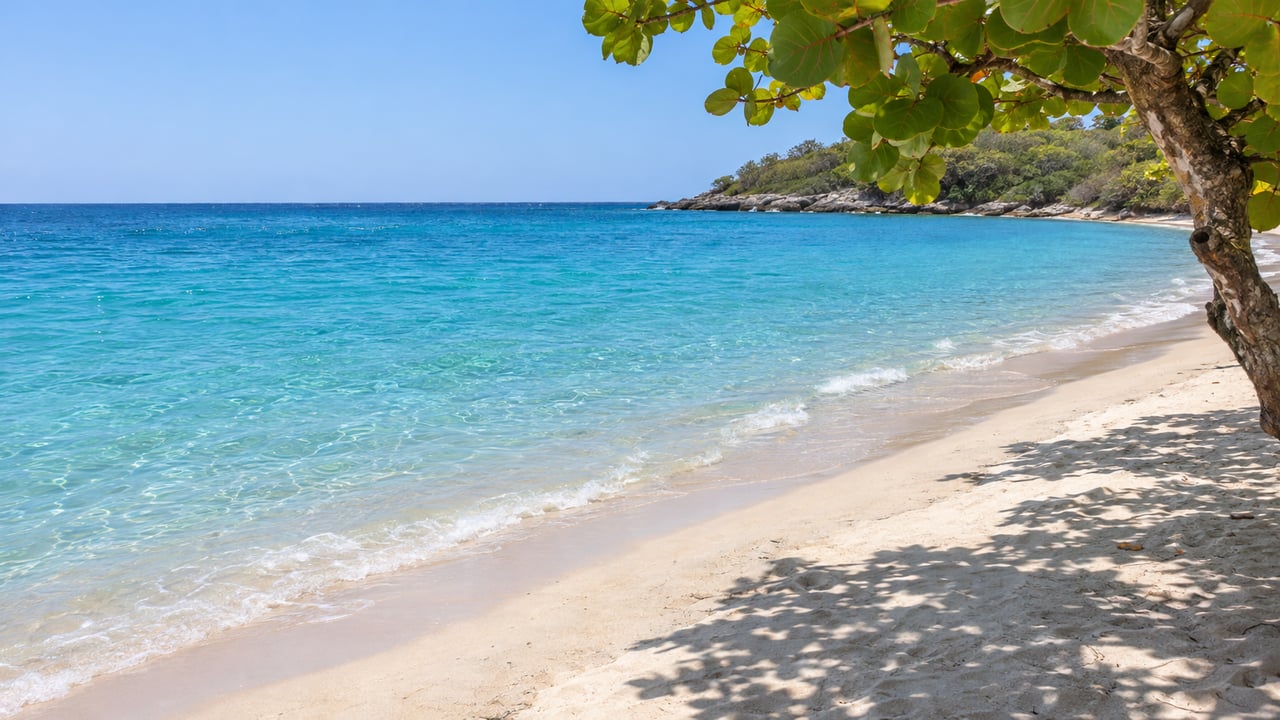
- Walk to the far side. A short trail crosses the coastal scrub to Pinel's rocky, undeveloped beach on the other side. The tourism office puts the walk at about 10 minutes, which suits small legs.
- Lunch and loungers back on the landing side. See the next section.
- Plan around the last boat home. The tourism office lists the last return at 16:30, so build the afternoon around that boat.
If your crew would rather paddle than swim, Karibuni notes that kayak and paddleboard rentals operate near the Cul-de-Sac pier on the mainland side.
Two kitchens, and how they handle lunch
Pinel has two restaurants, and both belong to the AEP. Their practical details line up closely, so the choice is mostly about timing and how you like to book.
Yellow Beach
- Hours: 10:00 to 16:00 Monday to Friday, 10:00 to 17:00 Saturday and Sunday
- Booking: reservations recommended. Chair and table requests go through WhatsApp at +590 690 33 88 33
- Loungers: €35 for two beach chairs and an umbrella in the second and third rows
- Payment: credit cards accepted except American Express. US dollars accepted in cash at a 1:1 rate
Karibuni
- Hours: open seven days a week in high season, until 5 p.m.
- Booking: reservations recommended. For same-day requests, call rather than use the online form
- Loungers: €35 a day for two chairs and a parasol
- Recognition: Karibuni says it received the Green Key environmental label for the first time in 2026
Yellow Beach takes dollars at par, and the ferry price is 10 euros or 12 dollars. For a family of four, that difference adds up over a day, so euros are the cheaper currency for the boat.
The Green Key label and the kids' booklet came out of the same island in the same year. The businesses that rely on Pinel's reef and scrub are putting their own effort into protecting them.
What the route asks children to notice
The booklet takes place inside a protected area, and the rules there explain why the AEP focused it on behavior. On its Pinel page, the Réserve Naturelle de Saint-Martin says the island is under total protection. Fishing is prohibited and jet skis may not operate there. Boats may anchor only on sand, never overnight, and landing on Petite Clé, the small cay nearby, is formally prohibited.
Below the surface, the tourism office describes snorkelers near the ferry landing seeing turtles, conch, called lambis locally, and colorful fish at depths of 5 to 10 meters. On land, Yellow Beach's site features a guest review that mentions spotting iguanas.
The booklet invites children to explore the reserve's fauna and flora and to learn the habits that protect it. The litter-collection gear the partners are putting on the island lets kids help look after Pinel while they're there.
Why the bay sets the schedule
Pinel's operators share one landing, which also means they share one weakness. Le Pélican reported that the Cul-de-Sac ferries stopped on Sunday, April 5, 2026, over Easter weekend, because of sargassum collection in the bay. Trips to Tintamarre from the same landing were suspended as well. One passeur told the paper the crews did not want to take people to Pinel or Tintamarre only for them to be stranded, or for the boats to overheat. He described Easter as the busiest weekend of the year for carrying people to Pinel.
In the same Le Pélican report, Karibuni manager Erick Clément said it was almost impossible to predict the state of the bay and that the restaurant worked day to day. Karibuni reopened on April 7, he explained, because some customers always arrive by their own means.
In October 2025, the Collectivité de Saint-Martin set out its plan for the bay. Le Pélican reported that the Collectivité had collected 14,000 tonnes of sargassum between February 1 and September 30, 2025, a record. It had also spent more than €4.4 million on the problem that year, compared with €700,000 in 2022. The plan for Cul-de-Sac called for three diverter barrier sections set in a cascade, forming a funnel that guides the seaweed to a chosen collection point. The Collectivité estimated the setup would stop about 90% of arrivals from reaching the shore. At the time, it was aiming to have the barriers working in May and June 2026, before the peak of the season.
Families who come by their own boat fall under the Réserve Naturelle's mooring rules. Le Pélican's November 2025 report covers the reserve's buoy network, and the Réserve publishes its official regulations for anyone who needs the details.
For a family on the ferry, this comes down to a simple habit. Ask the passeurs at the Cul-de-Sac landing how the bay looks before you unload the car, and message your restaurant once you know your boat.
From our office in Orient Bay, Pinel is one of the first places we suggest when friends or family visit with children, and this season's booklet makes the trip even better. If you'd like our team's take on the Cul-de-Sac side of the island, from the landing to the paths up into Mont Vernon, Oceano Christie's International Real Estate is happy to share what we know. Contact Us.